
Native Plants of Maryland
by Leela Ramaswamy
Hi! I’m a middle schooler who loves science and art. I brought these two interests together to create an illustrated guide to native plants in my neighborhood (in Maryland!).
Native plants are important because they support animals, insects, and the environment. And they are amazing to explore.
In this guide you’ll find fun facts and interesting information about more than 20 plants, organized into categories like trees, flowering plants, shrubs, grasses, groundcovers, and fruiting plants (this category is especially yum!).
I am sharing some activity ideas to help you start exploring plants in your own neighborhood.
Also, I interviewed a biologist (who also happens to be my neighbor!) about native plants. She had some really interesting things to say and some very cool stories to share!
Interview with Ms. Ann Gallagher (Certified Senior Ecologist and Arborist)…
1) What makes a plant native?
A plant is native if it evolved over time in the conditions and location where it grows. A native plant evolves with partners – which include rocks, soil, insects, and birds – that it lives around. The plant and its partners have shared the same environment—like sunlight, weather, and climate—for a very long time. — Ms. Ann Gallagher (Certified Senior Ecologist and Arborist)
2) What do native plants do for the environment?
3) Are there enough native plants growing in Maryland?
4) Are there too many invasive species in Maryland?
5) Have you ever eaten any of the plants in this guide?
TREES are the tallest types of plants in the world. They clean the air, stop soil erosion, and are home to many different plants, animals, and fungi.
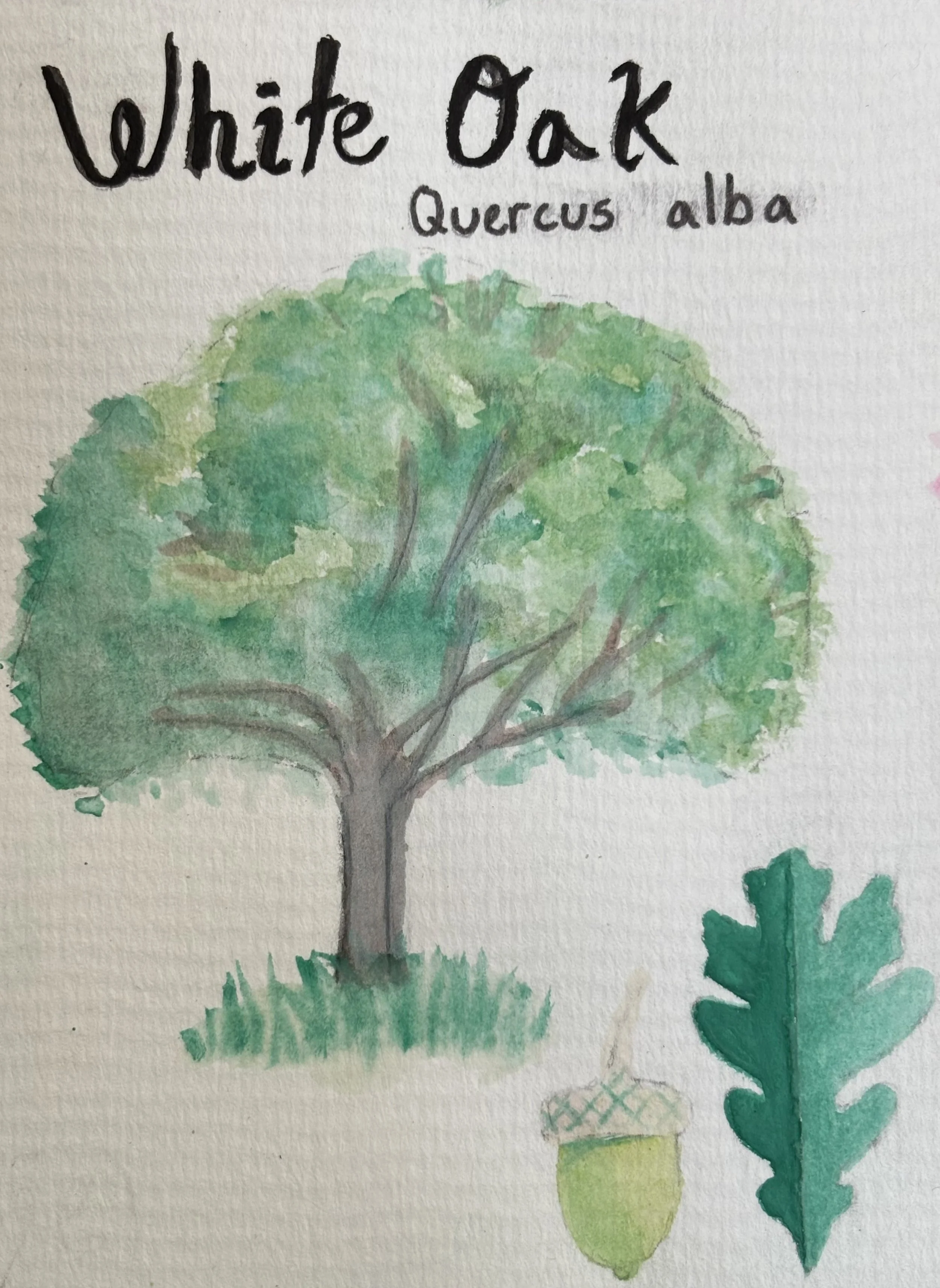
White Oak
Scientific name: Quercus alba
APPEARANCE
White oak usually grows to about 80 feet tall, which is the height of an 8-story building! Unlike acorns from other oak trees, the white oak acorns are not very bitter. The bark looks like it has long cuts in it. This type of bark is called scaly.
WHERE TO FIND IT
This tree does not do well in compact soil and needs about 7 hours of full sun every day. So you will most likely find it in its own patch of sun and in loose soil.
WHAT IT DOES
White oaks provide good shelter for birds, squirrels, and insects. Because of their wide branches, birds can easily fly through this tree to build and access nests. And small animals can live in the holes that develop in the trunk.
FUN FACTS
It is called a white oak because of its light gray bark.
It has waterproof wood that is used for building boats.
It is the state tree of Maryland, Connecticut, and Illinois.
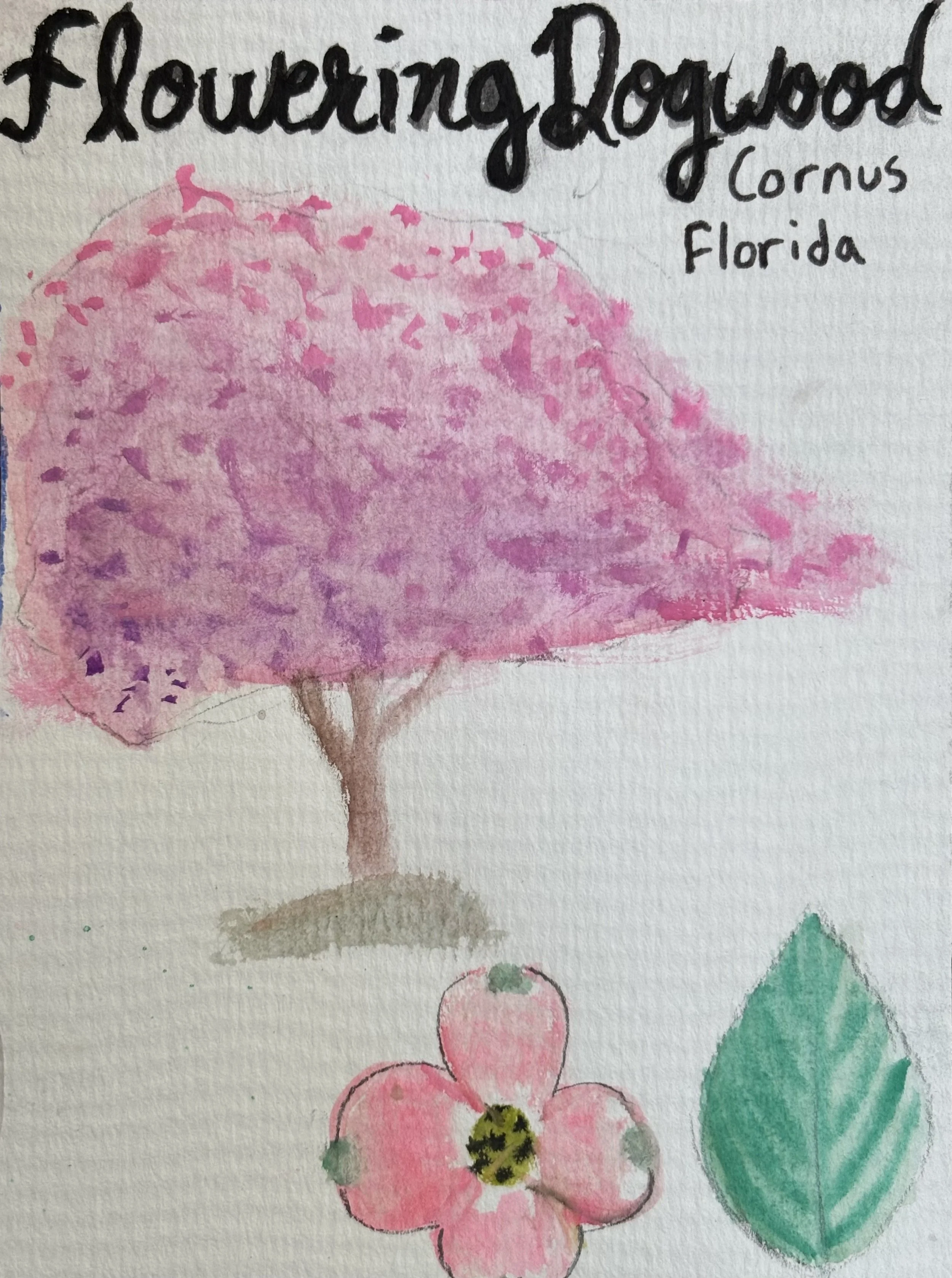
Flowering Dogwood
Cornus florida
APPEARANCE
The flowering dogwood has wide, spread out branches and scaly gray-brown bark. What appears to be petals on each flower are not actually part of the flower! These are called bracts – they are special leaves around a flower that attract pollinators. The bracts on flowering dogwoods come in red, pink, and white colors. The actual flower is in the middle of the bracts and is bright green or yellow. In the fall, the tree also grows small bunches of bright red berries and its leaves turn crimson red. This tree is generally 15 to 35 feet tall.
WHERE TO FIND IT
Flowering dogwoods prefer some shade for about 6 hours each day and moist soil, so you should not look for it in a very sunny or hot place.
WHAT IT DOES
The leaves of the flowering dogwood break down very quickly, so they enrich the soil and help other plants grow. Pollinators like bees and butterflies drink the nectar in the flowers, and the berries are eaten by birds and small mammals.
FUN FACTS
Some Native American tribes used the bark of flowering dogwood for fever and pain relief.
In Christianity, its flower symbolizes Jesus’s cross.
Ancestors of dogwood trees lived when the dinosaurs were nearing extinction.
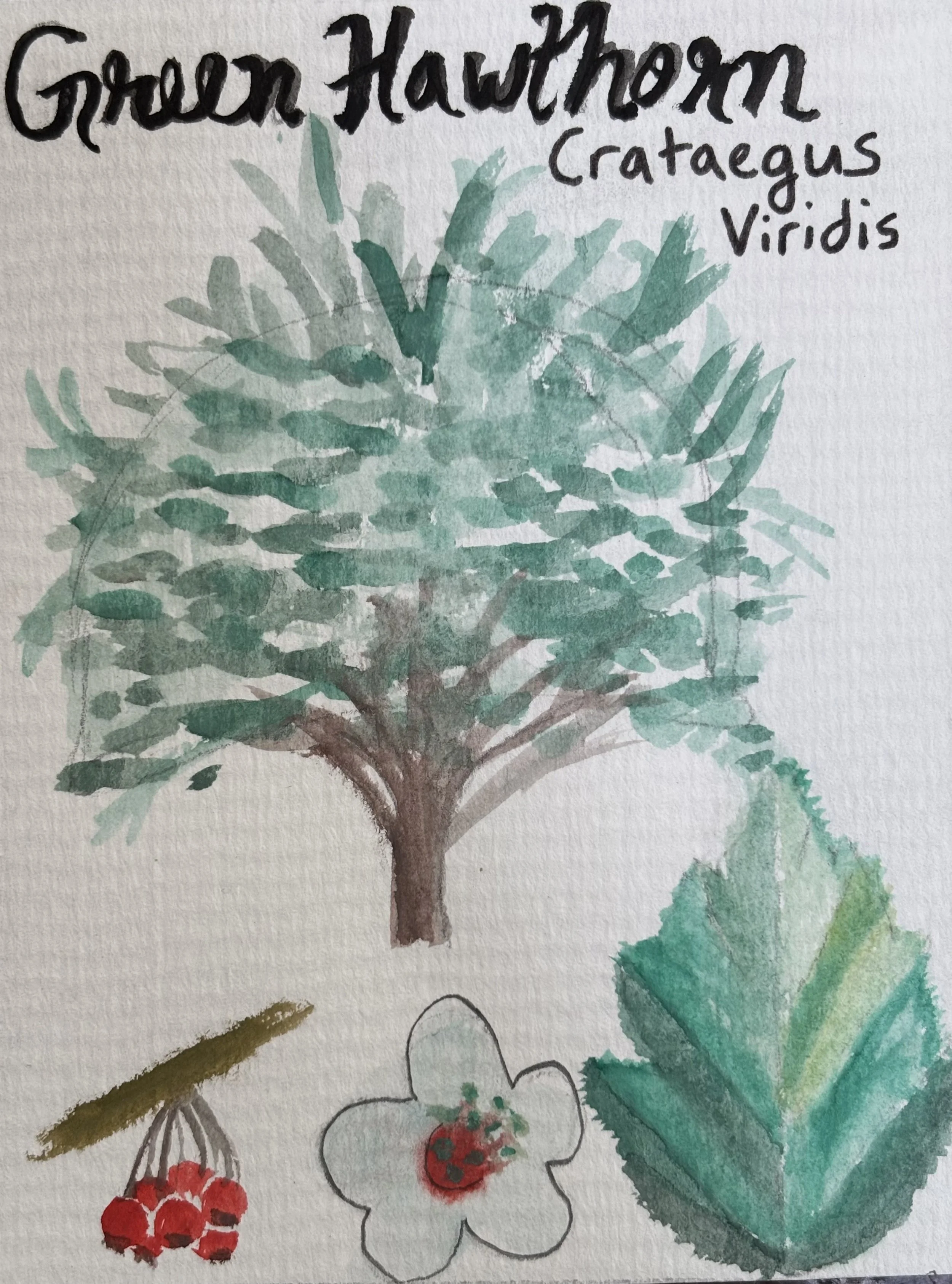
Green Hawthorn
Crataegus viridis
APPEARANCE
The green hawthorn grows to between 20 and 35 feet tall. It has clusters of white flowers in spring, followed by bright red berries that can last until winter. Its gray bark becomes scaly with age and may show an inner bark that is orange-brown in color.
WHERE TO FIND IT
Green hawthorn grows best in full sun and away from juniper trees. Junipers can carry a fungus that spreads through the air and can make hawthorn leaves and fruit sick.
WHAT IT DOES
In spring, green hawthorn flowers feed bees and butterflies. Its sharp thorns help protect nesting birds, and its bright red berries become food for birds and small mammals.
FUN FACTS
Hawthorn fruits may look like berries, but they’re actually tiny apples!
Green hawthorn is known for being more disease resistant than many other hawthorn trees.
It has sharp thorns that can grow several inches long. These thorns protect nesting birds from predators!
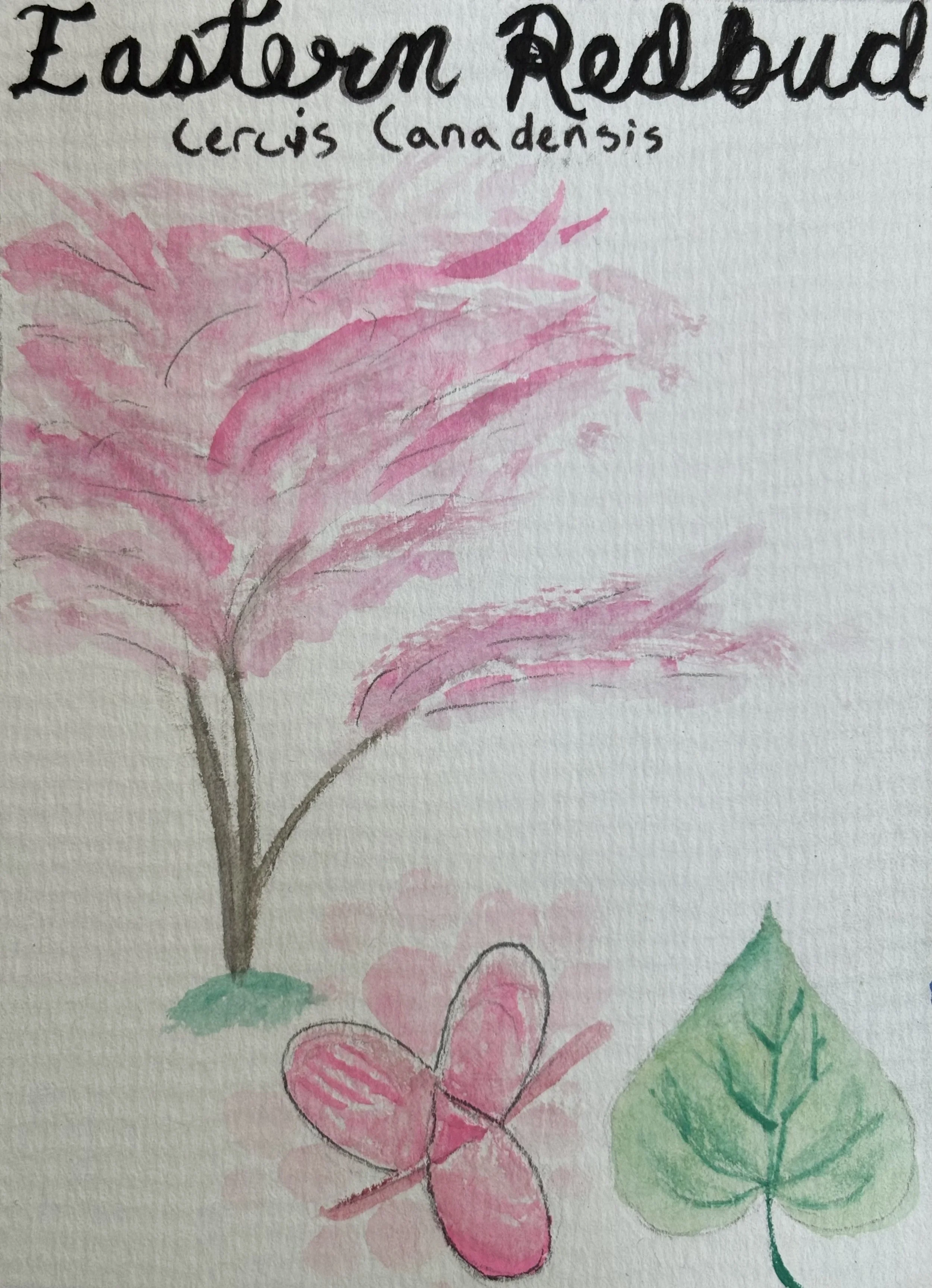
Eastern Redbud
Cercis canadensis
APPEARANCE
The eastern redbud is a small tree and can be 20 to 35 feet tall. It has heart shaped leaves. It has bright purple or pink flowers that grow in clusters straight from the branch (this feature is called cauliflory). In the fall it grows long flat seed pods. Its bark is brown and can be scaly with age.
WHERE TO FIND IT
This tree does well in places where it gets 4 to 8 hours of direct sunlight and has dry, loose soil.
WHAT IT DOES
Eastern redbuds give nectar to pollinators and seeds for birds, squirrels, and deer to eat.
FUN FACTS
The flowers are edible for humans and have a slightly sweet taste.
It is one of the earliest blooming trees in spring.
Eastern redbud is related to beans and peas.
What do native plants do for the environment?
Native plants fit into their world the way they are supposed to. This can mean that some native plants are doing a lot of general work, and some of them are doing more specific work.
Oak trees are a good example of native plants that are literally big and their contributions are also big. They maintain soil moisture balance. They have relationships with the fungi that live in the microbes in the soil. They also have a relationship with insects. In fact, white oaks support more butterfly species and their caterpillars than any other tree. These caterpillars become food for the birds to eat. The white oaks also provide places for the birds to nest. The acorns from these trees feed deer and other animals.
While white oaks are generalists in how they contribute to their environment, there are other plants that are specialists as they fill a particular niche. For example, butterfly milkweeds serve as the main food source for the caterpillars of monarch butterflies.
Also, non-native plants will not interact with native insects, pollinators and birds in the same way as native plants. There is evidence that spiders that create webs in native plants have a more nutritional diet than spiders that make webs in non-native plants. This is because the native plants attract more of the native insects, so the spider is catching and eating more of the native insects that it evolved to eat. It is a little like eating a healthy diet compared to junk food.
— Ms. Ann Gallagher (Certified Senior Ecologist and Arborist)
FLOWERS make nectar which attracts pollinators that carry the pollen. This transfer of pollen helps plants reproduce, which results in making seeds for many flowering plants.
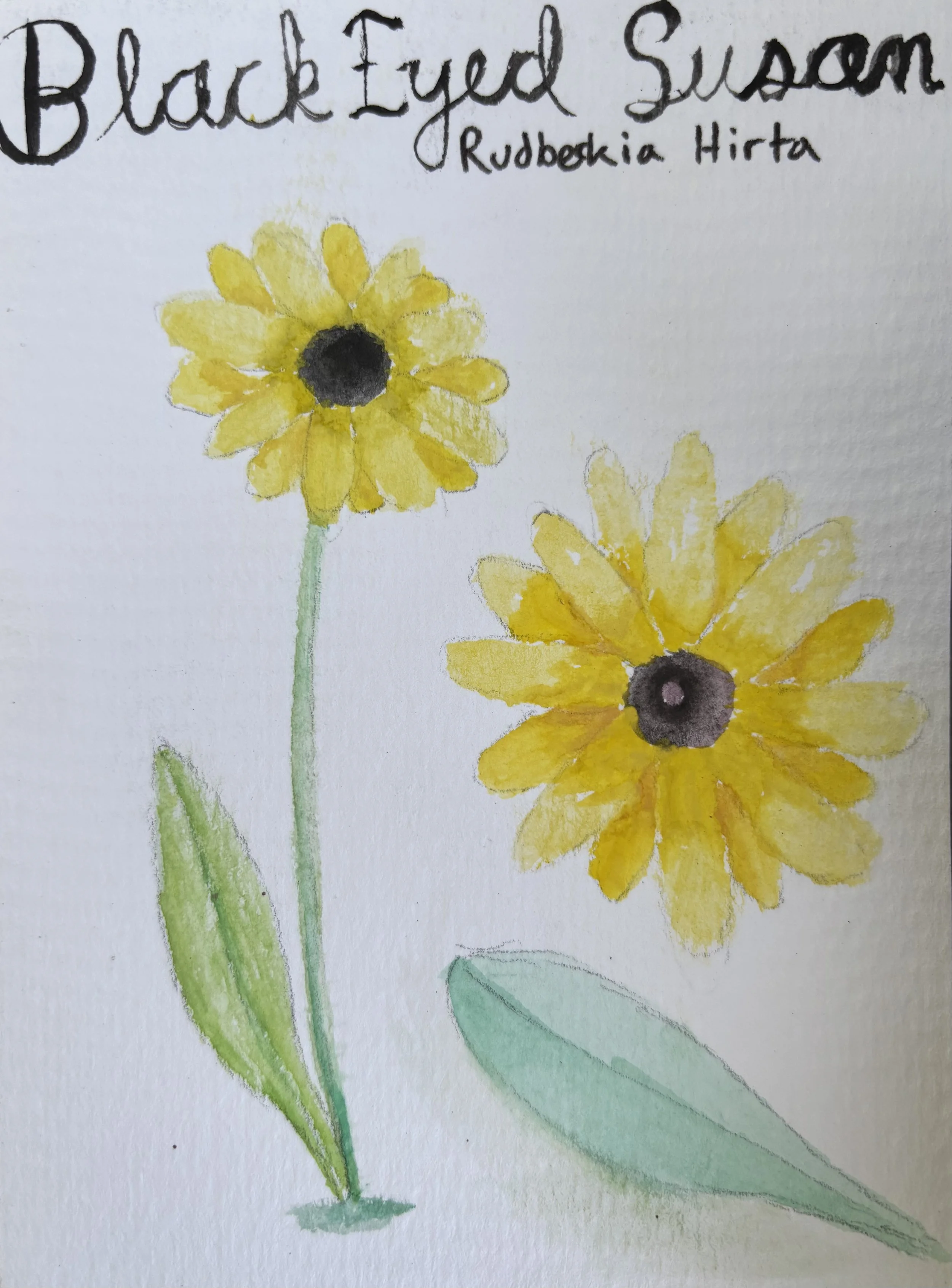
Black-Eyed Susan
Rudbeckia hirta
APPEARANCE
The black-eyed Susan grows about 1 to 3 feet tall. Its petals are usually bright yellow, but some varieties can be orange or reddish-brown. The “eye” is the dark brown or black center of the flower. The leaves and stem are covered in fuzzy hairs.
WHERE TO FIND IT
Black-eyed Susan grows best in full sun, needing about 6–8 hours of sunlight each day. They prefer open spaces where they are not crowded out by other plants.
WHAT IT DOES
Like most flowers, black-eyed Susan provides nectar for pollinators such as bees and butterflies. Later in the season, their seeds become food for birds.
FUN FACTS
It is the state flower of Maryland.
Some Native American tribes used it to treat earaches, colds, and even snake bites.
It is a pioneer plant, which means it is one of the first plants to grow in open areas.
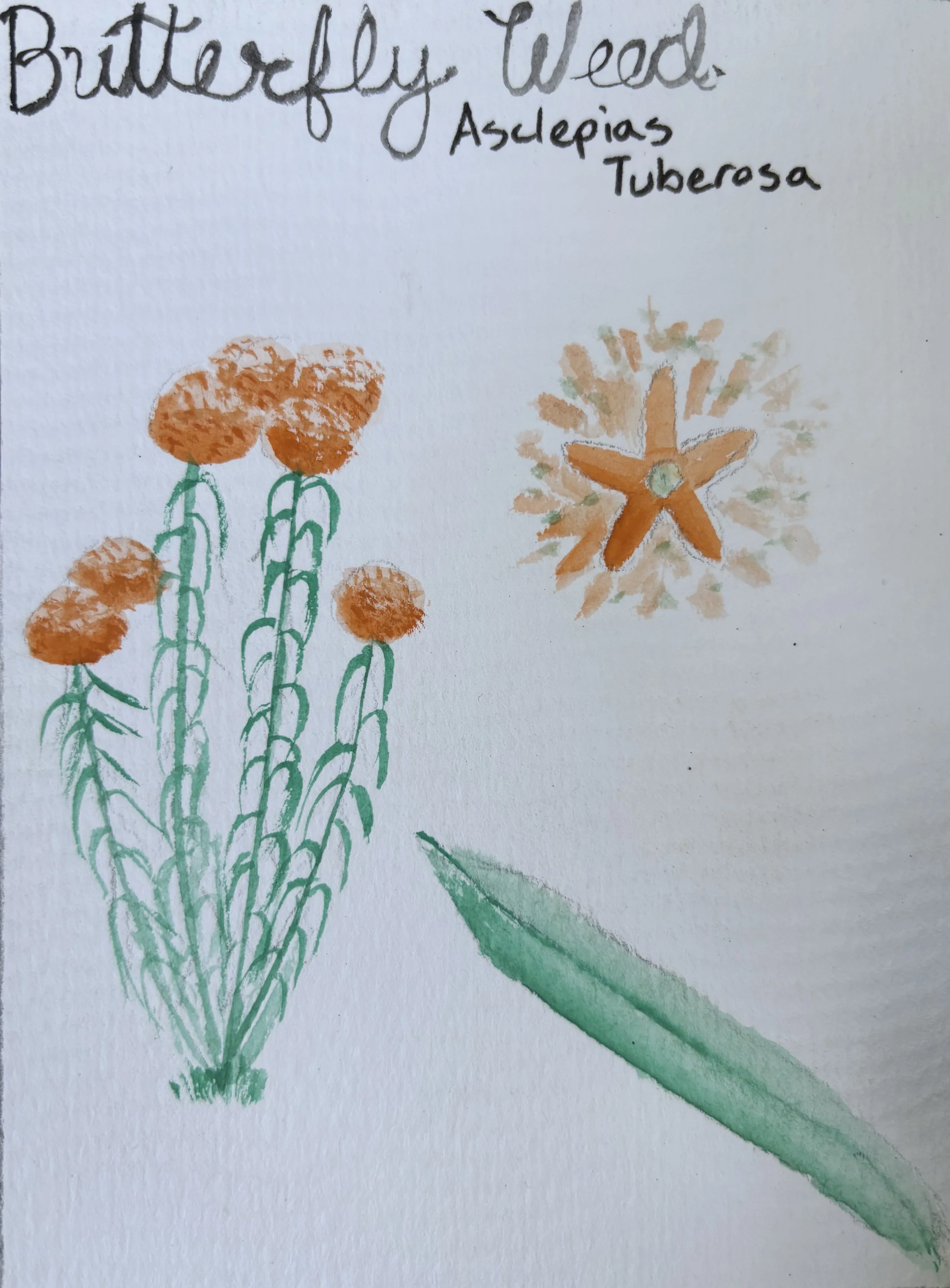
Butterfly Weed
Asclepias tuberosa
APPEARANCE
Butterfly weed is a type of milkweed. Its bright flowers are usually orange, but they can sometimes be yellow or reddish-orange. The plant typically grows 1 to 3 feet tall. The flowers grow in rounded clusters, and the plant has long, narrow leaves.
WHERE TO FIND IT
These plants need an area with full sun and dry soil. They do not grow well in mulched areas.
WHAT IT DOES
Butterfly weed attracts butterflies and other pollinators with its nectar and is a good host for caterpillars of monarch butterflies.
FUN FACTS
It has tuberous roots, which are big roots used for water and food storage.
Unlike most types of milkweed, it has thin, watery sap.
Monarch caterpillars eat butterfly weed and store chemicals from the plant in their bodies, which helps protect them from predators.
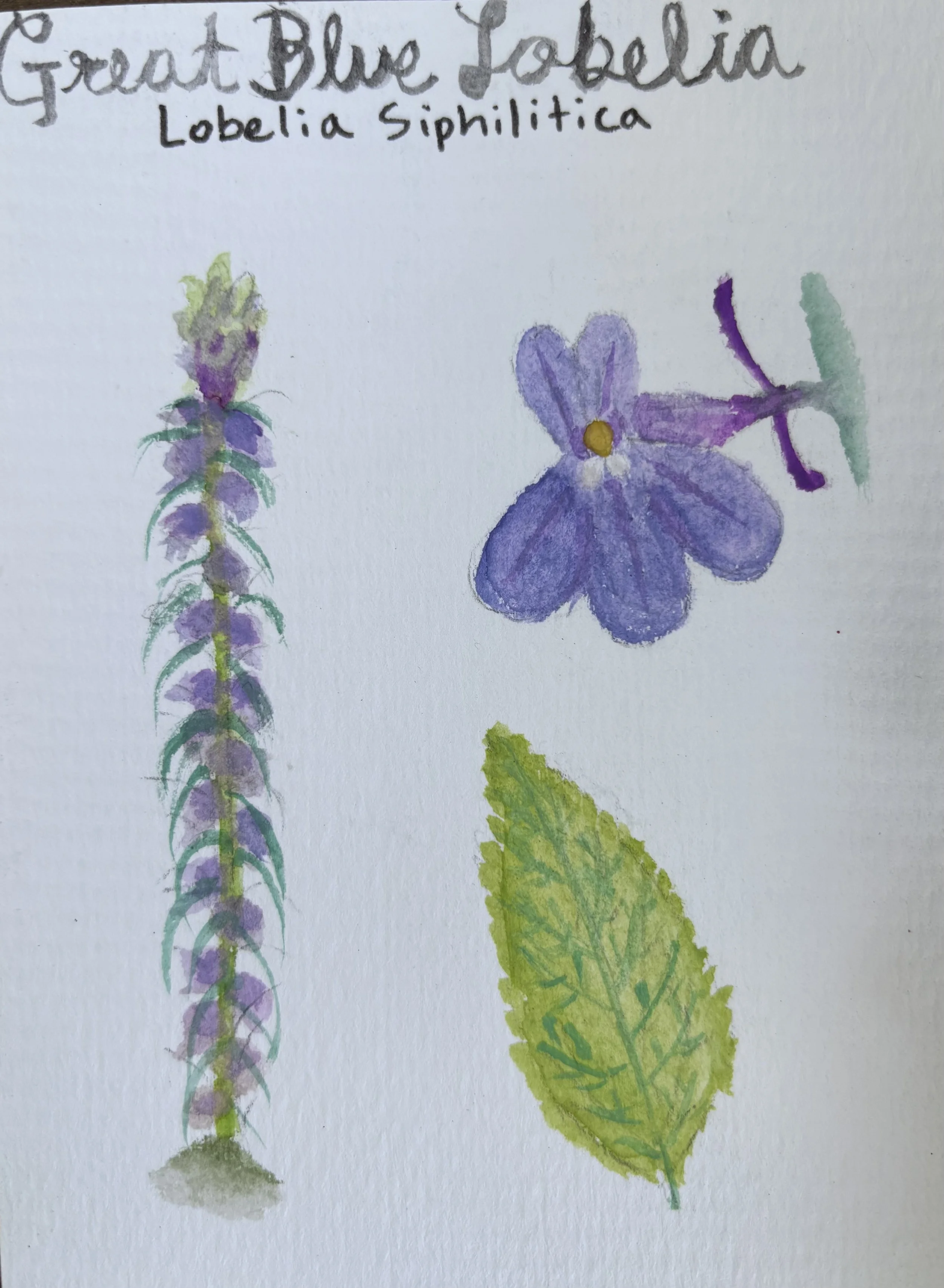
Great Blue Lobelia
Lobelia siphilitica
APPEARANCE
Great blue lobelia is a tall native wildflower with many small blossoms growing along a spike. The flowers are usually blue to violet-blue. It typically grows 2 to 4 feet tall.
WHERE TO FIND IT
It grows best in moist soil and partial shade, often near streams or woodland edges.
WHAT IT DOES
Its flowers attract bees, butterflies, and other pollinators.
FUN FACTS
It is commonly nicknamed the “Blue Cardinal Flower”.
Some Native American tribes used great blue lobelia medicinally, including for coughs and other illnesses.
Its flowers are shaped perfectly for bees, giving them a place to land while they collect nectar.
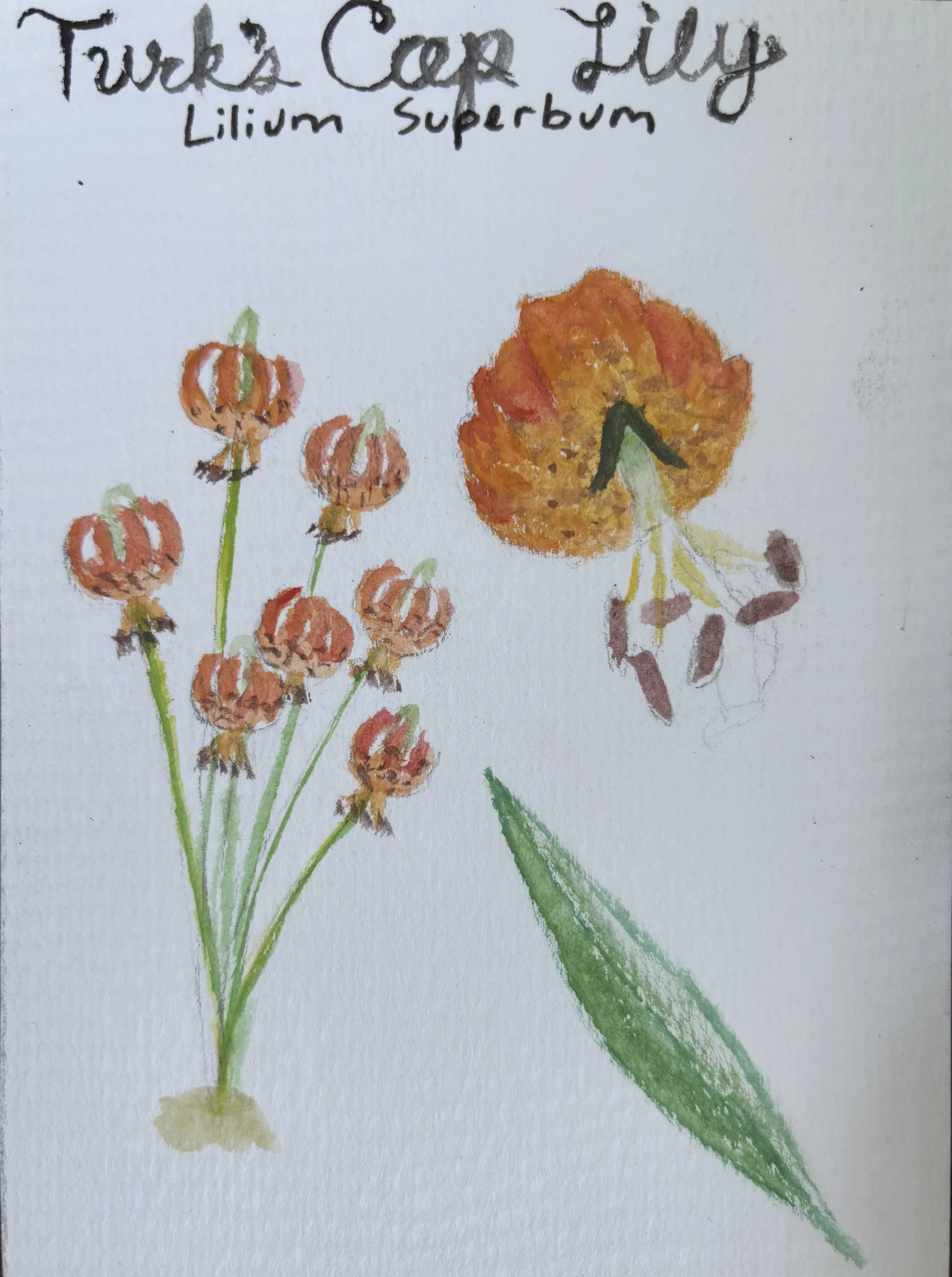
Turk’s Cap Lily
Lilium superbum
APPEARANCE
Turk’s cap lily has bright orange flowers with dark reddish spots. Each flower has six petals that curve backward, making it look like a small turban. The plant can grow 4 to 8 feet tall, and sometimes even taller.
WHERE TO FIND IT
Turk’s cap lily grows best in moist soil and full sun to partial shade. It is often found in meadows and near streams.
WHAT IT DOES
Its bright flowers attract hummingbirds, bees, and butterflies.
FUN FACTS
It is one of the tallest native lilies in North America.
Some Native American tribes cooked and ate its bulbs.
It can take several years before a young plant grows large enough to bloom.
Are there enough native plants growing in Maryland?
Yes and no. It depends on what you mean by “enough”.
Yes, we have Maryland state parks, we have protected lands–there are a lot of people who put their land under conservation, and there are multigenerational farmers who own land in Montgomery County Agricultural Zone, who have dedicated a whole bunch of their land for native trees. These farmers are trying to not only have pumpkin patches but also integrate with the environment they live in.
But we as humans do things that take away the native plants. For example, people like their garden to look pretty and they may purchase non-native plants. Local nurseries are going to sell more non-native plants, if that is what will make their customers happy. This creates a big gap in the type of plants in state and national parks versus what we have in our gardens.
— Ms. Ann Gallagher (Certified Senior Ecologist and Arborist)